Why I’ll Never Assessments For Adhd In Adults Artwear Express
The scoring system used and how the index was calculated Symptom Score... Download Table

Weiss Symptom Record (WSR), which checks for a range of symptoms that may occur with ADHD and other disorders. Weiss Functional Impairment Rating Scale for Parents (WFIRS-P). SNAP-IV-26, which checks attention, hyperactivity and impulsiveness, and defiance. Teachers also are often asked to complete rating scales, such as: Weiss Symptom Record.
Symptom scoring scale of dyslipidemia type ii (a, b) Download Table

To identify an overall WFIRS-P cut-off score associated with maximum overall sensitivity and specificity, Youden's J was calculated for every test score. A J value of 0 indicates poor overall sensitivity and specificity (e.g., 50% sensitivity and 50% specificity) for a specific cut-off score, whereas a value of 1 indicates 100% sensitivity and specificity.
(PDF) WEISS SYMPTOM RECORD II · (e.g. chores, bills, appointments) HYPERACTIVITY AND

Weiss Symptom Record II. Assesses ADHD symptoms, as well as other psychiatric symptoms that children and adolescents may experience.. 11-question scale that examines: orientation, registration, attention and calculation, recall, and language. Cut off score ≤ 23 (total 30). 🔗 Download. Geriatric Depression Scale. 30-item, Y/N.
Pls 5 Scoring Manual Pls5 English Final / Scarlettpng04

WSR-II [Weiss Symptom Record II]. It is commonly used when assessing ADHD to ensure relevant comorbidities or disorders with overlapping symptoms are considered. Created by Dr. Margaret Weiss. The scale can be used by clinicians and researchers free of charge and can be posted on the Internet or replicated as needed.. WSR-II Score: Clear.
Change in GERD symptom scoring and QOLRAD questionnaire scoring in... Download Scientific Diagram

Measurement-informed care is a cornerstone of evidence-based practice and shared decision-making. A structured diagnostic interview specific to ADHD provides a globally agreed-on standard of evaluation. These interviews are accessible in the public domain in multiple languages and are helpful to clinicians new to the diagnosis of ADHD. Broad-based rating scales looking at multiple domains of.
Sf 1199 Fill out & sign online DocHub
1The formulation of items on the Weiss Symptom Record was based on DSM-IV criteria. Scoring This is not a psychometrically validated instrument but a clinical record of the DSM-IV criteria for various disorders. The DSM-IV criteria for diagnosis for each disorder are listed in the column labelled 'Diagnosis'.
The usefulness of the SOFA and APACHE II scoring systems for the early prediction of mortality

WEISS SYMPTOM RECORD II Difficulty with: None (0) Mild (1) Moderate (2) Severe (3) N/A MOOD REGULATION Distinct period(s) of intense excitement Distinct period(s) of inflated self-esteem, grandiose Distinct period(s) of increased energy Distinct period(s) of decreased need for sleep Distinct Period(s) of racing thoughts or speech
fr caddraGuidelines2011WSR Fichier PDF

Results: Area under the curve (AUC) was 0.91 (95% confidence interval 0.88-0.93) for the overall WFIRS-P score, suggesting highly accurate classification of ADHD distinct from non-ADHD. Sensitivity (0.83) and specificity (0.85) were maximal for a mean overall WFIRS-P score of 0.65, suggesting that this is an appropriate threshold for differentiation.
(PDF) Symptom Based Scoring

Weiss Symptom Record (WSR), which checks for a range of symptoms that may occur with ADHD and other disorders. Weiss Functional Impairment Rating Scale for Parents (WFIRS-P). SNAP-IV-26, which checks attention, hyperactivity and impulsiveness, and defiance. Teachers also are often asked to complete rating scales, such as:
성인 ADHD 선별 검사 Mindwell
WEISS SYMPTOM RECORD II Difficulty with: None (0) Mild (1) Moderate (2) Severe (3) N/A PERSONALITY: Mean Score _____ Self-destructive Stormy, conflicted relationships Self-injurious behaviour (e.g. cutting) Low self-esteem Manipulative Self-centered Arrogant Suspicious Deceitful with no remorse Breaking the law or antisocial behaviour
[PDF] ACUTE PHYSIOLOGY AND CHRONIC HEALTH EVALUATION (APACHE) II SCORE THE CLINICAL PREDICTOR

WSR 2/5 101 Not at all Somewhat Pretty much Very much N/A Diagnoses (0) (1) (2) (3) TIC DISORDERS 307.2 SEVERITY
A Year of Gratitude, an exercise

Do you need a tool to assess the symptoms of ADHD in adults? The Weiss Symptom Record (WSR) is a validated questionnaire that can help you diagnose and monitor the disorder. Download the PDF from Yumpu, the digital publishing platform that offers free access to millions of documents.
The scoring system used and how the index was calculated Symptom Score... Download Table

Instructions to Physician: Symptoms rated 2 or 3 Not at all Somewhat Pretty much Very much N/A (DSM are positive and total. Weiss symptom Record (WsR) Patient Name: Date of Birth: MRN/File No: Physician Name: Date: WSR 1/5. Toolkit WSR 2/5 8.15
A clinimetric analysis of a BPRS6 scale for schizophrenia severity Acta Neuropsychiatrica

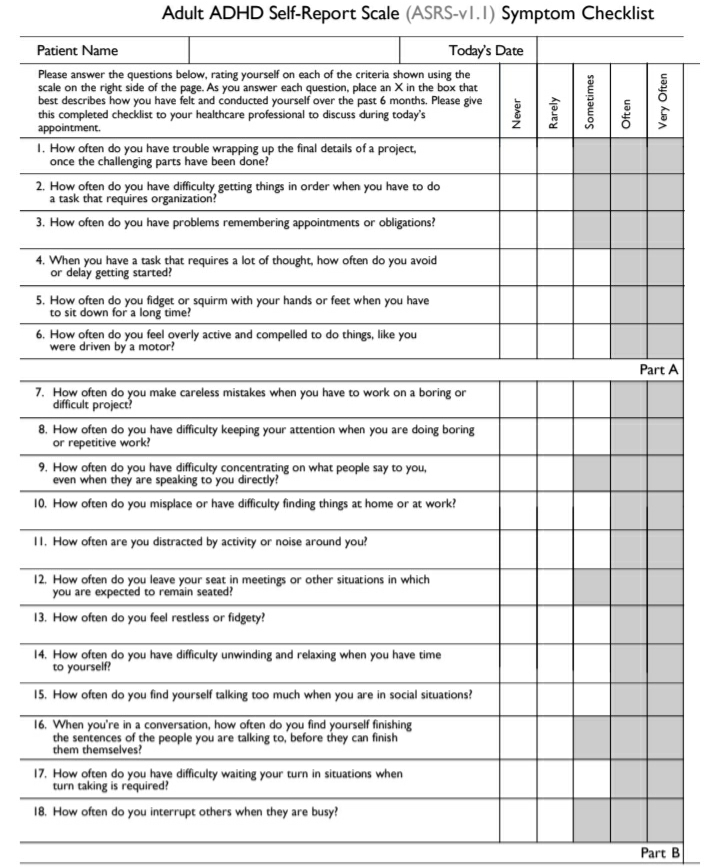
20.1.1.1 Description. The Symptom Checklist is an instrument consisting of the 18 DSM-IV-TR criteria. Six of the 18 questions were found to be the most predictive of symptoms consistent with ADHD. These six questions are the basis for the ASRS v1.1 Screener and are also Part A of the Symptom Checklist. Part B of the Symptom Checklist contains.
Gaf Test Printable

Weiss Symptom Record (WSR), which checks for a range of symptoms that may occur with ADHD and other disorders. Weiss Functional Impairment Rating Scale for Parents (WFIRS-P). SNAP-IV-26, which checks attention, hyperactivity and impulsiveness, and defiance. Teachers also are often asked to complete rating scales, such as: Weiss Symptom Record.
Weiss symptom record ii Fill out & sign online DocHub

Toolkit 8.13 Weiss Symptom Record (WSR) Instructions Purpose To collect systematic information from the patient and other informants about various disorders, including learning, developmental and personality difficulties To serve as a cross check to assist clinicians in focusing their mental status, assuring that they do not miss relevant but unusual comorbidities, and in differentiating.